Belangrijkste punten
- 3-step process: choose route, receive verifiable PDF with real PNR, show at airport or embassy.
- Real GDS booking: we issue through Amadeus, Sabre, or Travelport — same as a travel agent.
- 24–72 hour hold: the reservation auto-cancels after the hold window if not ticketed.
- Pricing: $7 one-way, $9 return, $14 multi-city — all tiers include a verifiable PNR.
- Date changes: easiest fix is to issue a fresh $7 ticket for the new date.
If you've booked a one-way flight to Bangkok, Bali, or Cancun and discovered at check-in that the airline wants to see proof of onward travel, you're not alone.
Travelers ask how does onward ticket work every day after their gate agent waves a passport back across the counter and demands a flight out. The good news: there's a legitimate, $7 fix that takes about two minutes — and it's been keeping flexible travelers, digital nomads, and visa applicants out of trouble for years.
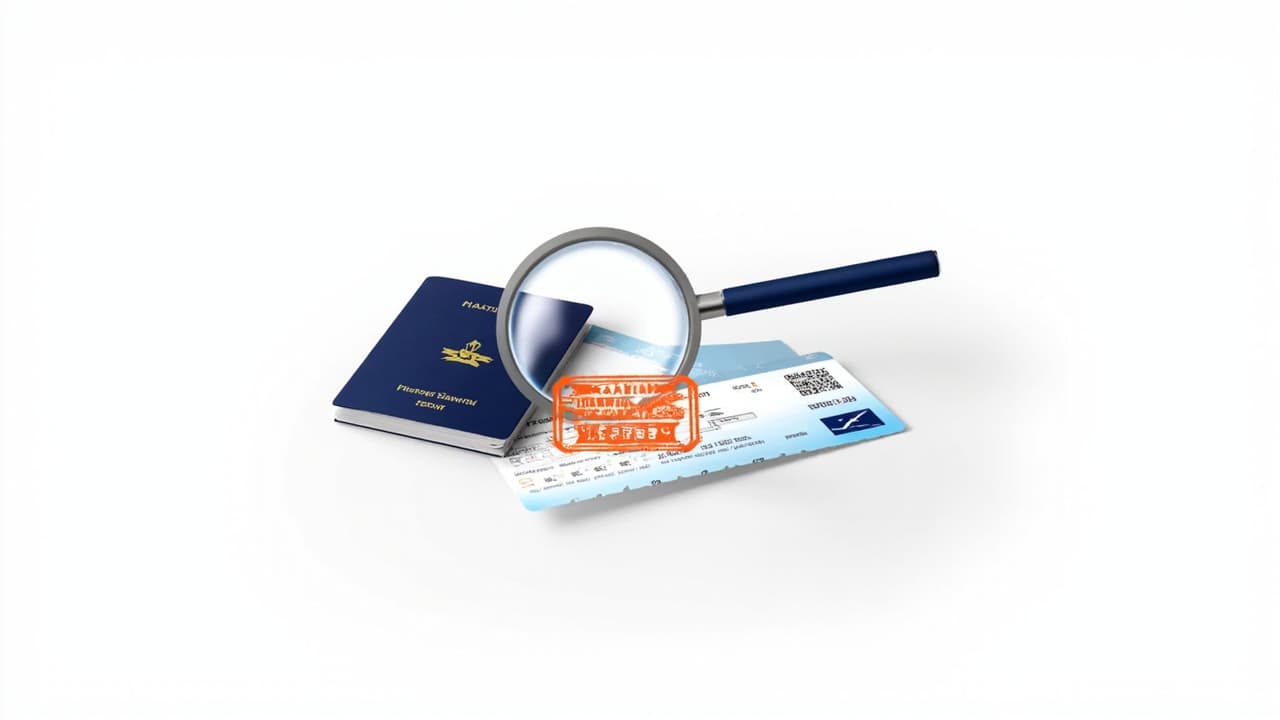
An onward ticket is a real, verifiable airline reservation issued under your name that satisfies the airline's or embassy's exit requirement. It isn't a fake PDF, a doctored screenshot, or a cancelled booking — those get caught and cause denied boarding. A proper onward ticket has a real PNR (Passenger Name Record) that can be looked up on the issuing airline's website.
That's why how onward ticket service works is a question worth understanding before you tap "buy."
This guide walks through the simple 3-step onward ticket process, then takes you behind the scenes — how we book on a real GDS, how the PNR holds for a set window, what happens if your dates change, and how to use it at the airport or embassy without a hiccup.
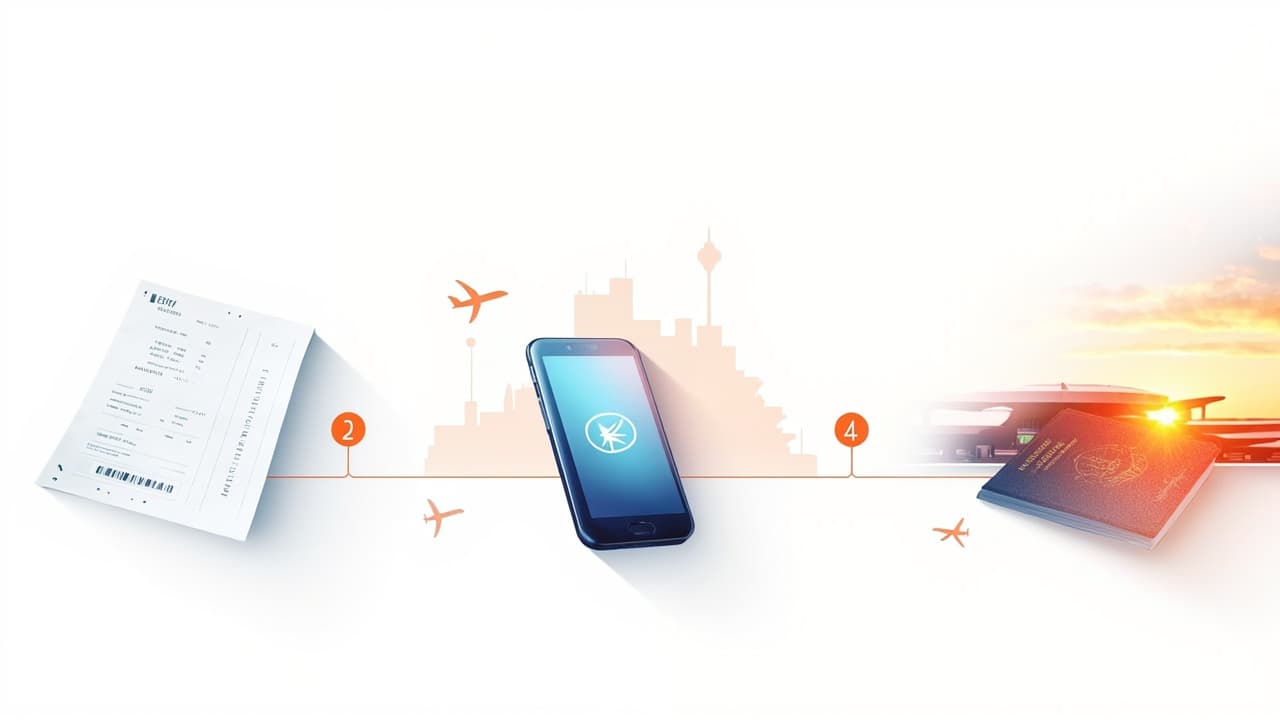
An onward ticket works in 3 steps: (1) you choose your route and travel date on the booking form, (2) we issue a real, verifiable PDF with a live PNR through the airline's GDS, and (3) you show the PDF at the airport counter or embassy. The reservation holds for 24–72 hours, which is enough to clear check-in or visa submission. It costs $7 one-way, $9 return, or $14 multi-city.
How does an onward ticket work in 3 simple steps?
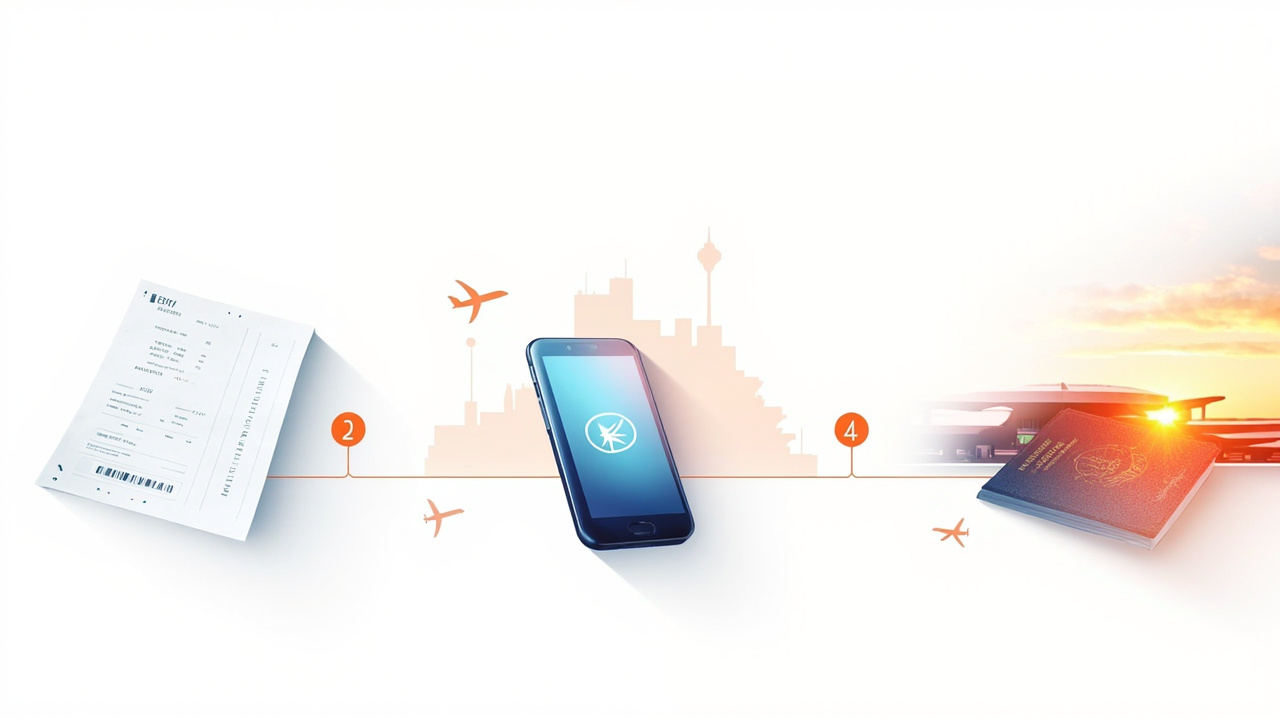
An onward ticket works in three steps that take roughly two minutes from start to finish. You enter your route and date, we book a real reservation on a live airline through the GDS, and you receive a verifiable PDF you can show at the airport or embassy. No paperwork, no waiting, no risk of a fake booking getting flagged.
Step 1 — Choose your route and travel date
Open the booking form, type the city you're flying out of, and pick the city you'd "leave for." Most travelers pick a cheap regional hop — Bangkok to Singapore, Manila to Kuala Lumpur, Cancun to Miami — because the destination doesn't have to be your real plan.
It just has to be a believable exit within your visa window. Pick a date 14–30 days after your arrival for visa-free countries, or whatever your visa rules require.
Add passenger names exactly as they appear on your passport, then choose one-way ($7), return ($9), or multi-city ($14).
Step 2 — Receive your verifiable PDF with a real PNR
Within 2–30 minutes (depending on the speed tier you pick), the system emails you a PDF that looks like any standard airline e-ticket.
The document includes the airline's logo, your full name, flight numbers, dates, and a six-character PNR code at the top.
That PNR is the key: paste it into the issuing airline's "Manage My Booking" or "Check My Reservation" page and the booking pulls up live, with your name on it.
That's the verification step every gate agent and embassy officer can do in 10 seconds.
Step 3 — Show your PDF at the airport or embassy
Print the PDF or open it on your phone, then hand it over when you're asked. At the airport, the check-in agent will glance at the PDF or run a quick PNR check on the issuing airline's site.
At the embassy, your visa officer will attach it to the application file. Either way, you're done. Your real one-way booking gets issued at the counter (if needed), and the onward reservation either expires on its own or is cancelled before charge.
That's the entire user-facing flow. Three steps, one PDF, a real PNR, and you've satisfied the airline's documentation policy without buying a $400 throwaway fare.
What happens behind the scenes when we book your ticket?
Behind the scenes, we book a real reservation on a real airline through a Global Distribution System. The GDS — Amadeus, Sabre, or Travelport — is the same wholesale network travel agents have used for decades to issue tickets. Our automated system queries live inventory, holds a seat, and generates the PNR exactly the way a human travel agent would.
The hold period is the magic ingredient. Most airlines allow ticketed reservations to sit unpaid for a set window — typically 24, 48, or 72 hours, depending on the carrier and route.
During that hold, the booking is fully verifiable: the PNR returns "confirmed" on the airline's website, your name and itinerary appear on the carrier's system, and the document satisfies any check that runs against it.
After the hold expires, the seat releases automatically without a charge to anyone.
Why the GDS matters for verification
A reservation issued through Amadeus or Sabre carries the airline's authority. When a Ryanair, AirAsia, or Cebu Pacific agent looks up your PNR on the operating airline's site, the booking is real — not a forwarded confirmation, not a scraped itinerary, not a faked PDF. That's why GDS-backed onward tickets pass strict counter checks while DIY screenshot bookings fail.
If you want a deeper comparison, our piece on dummy ticket vs real ticket walks through the technical difference. The short version: a verifiable PNR is the only thing airline staff are trained to trust.
Why we don't charge you the full fare
You're not buying a flight — you're renting a verifiable reservation for the window you actually need. The airline never collects the fare because the hold expires before payment is required. We charge $7 for the workflow, the GDS access, and the live PDF, not for an actual flown segment. That's the entire economic model, and it's why services like ours can charge a fraction of a refundable fare.
Need proof of onward travel today? Get a verifiable PDF in 2 minutes.
✓ Real PNR · ✓ Instant Delivery · ✓ Accepted by airlines & embassies — From $7
Get Your Onward Ticket →How long does an onward ticket stay valid before it expires?
Most onward tickets hold for 24 to 72 hours from the time we issue them, depending on the airline and route.
That window is set by the carrier's GDS rules, not by us — Lufthansa might allow 48 hours, Singapore Airlines 24, and a smaller regional carrier 72.
We always confirm the exact hold window in the email that delivers your PDF, so you know how long you have before the reservation auto-cancels.
Plan to use the ticket within that window. If you're flying out the same day, a 24-hour hold is plenty.
If your visa appointment is three days out, ask for a longer-hold option — we can route the booking to an airline that supports a 72-hour window, or you can re-issue closer to the date.
The PDF stays in your email forever, but the live PNR becomes inactive once the hold expires.
What "expires" actually means
When the hold expires, the airline releases the seat back to inventory and no charge is processed. The PDF document still exists in your inbox, but the PNR no longer pulls up a confirmed booking on the airline's site.
If a gate agent runs the check after the hold expires, they'll see "not found" or "cancelled" — which fails the verification test instantly. Don't try to reuse an expired onward ticket.
What if your travel date changes after you receive the ticket?
If your travel date changes, the cleanest solution is to issue a fresh onward ticket close to the new date. Because the cost is $7, re-booking is cheaper than fighting a refund or trying to extend a hold. Most travelers who get visa rejections, flight delays, or schedule slips simply order a new PNR for the updated window and use that one instead.
That said, we can sometimes accommodate small date shifts within the original hold period. If your hold is 72 hours and you need the booking to reflect a new date 24 hours later, contact support before the original hold expires. After that point, the only option is a fresh issuance.
What about visa rejections or denied boarding?
If you're denied a visa or denied boarding for a reason unrelated to the onward ticket itself, the ticket has already done its job — it satisfied the documentation requirement at the moment of submission. Your travel plans changing afterward is a separate problem. For visa applicants who need to resubmit, our guide on flight itineraries for visa applications covers the timing and re-issuance flow in detail.
Always issue your onward ticket within 24–48 hours of when you actually need it. That keeps the hold live exactly when the airline or embassy runs its check. Get your onward ticket from $7 →
Where can you use an onward ticket — airport, embassy, or both?
An onward ticket works at both the airport check-in counter and the embassy visa desk, and the verification flow is identical at each. The agent or officer reads your PNR, checks it against the issuing airline's system, and accepts the document if the booking returns "confirmed." Embassies tend to want a printed copy for their physical file; airlines accept either print or phone screen.
The pattern for use is straightforward. At the airport, hand the PDF over alongside your passport when you reach the counter. The agent runs the standard Timatic check, looks at your onward proof, and issues your boarding pass. At the embassy, attach the PDF (printed) to your visa application packet — most embassies require it in the supporting documents section alongside hotel bookings, bank statements, and your invitation letter.
Airline acceptance rates
Airlines that check onward tickets accept verifiable PNR-coded bookings at near-100% rates. Strict carriers like AirAsia, Ryanair, Cebu Pacific, Wizz Air, and Scoot run live PNR lookups, and a real reservation passes every time.
We've issued well over 200,000 onward tickets and our denial rate from airline counters sits below 0.5%. The handful of failures we see come from travelers who try to use expired holds or who mismatch passport names.
For a route-by-route breakdown of which carriers actually check, read our analysis of whether airlines check onward tickets. It's a useful companion to this guide if you're flying a strict route.
Embassy acceptance rates
Embassies are typically less rigorous than airlines about live PNR verification. Many simply check that the document looks legitimate and lists realistic flight numbers, dates, and times. That said, Schengen consulates, U.K. visa officers, and some U.S.
consular sections do run PNR checks on the airline's site. Issue your onward ticket within 24 hours of submission so the booking is still in active hold when the officer reviews it.
Our piece on dummy tickets for Schengen visas covers the consulate-specific quirks.
How does pricing break down for the different ticket types?
Pricing follows the booking complexity, not the destination. A one-way exit ticket from any airport to any city is $7. A return ticket — useful for visa applications that ask for round-trip itineraries — is $9. A multi-city itinerary with two or more stops, common for Schengen multi-country visas, is $14. The table below summarizes what each tier includes.
| Ticket Type | Price | Best For | Hold Window |
|---|---|---|---|
| One-Way | $7 | Visa-free entry, airport counter checks | 24–72 hours |
| Return | $9 | Tourist visas, embassy round-trip proof | 24–72 hours |
| Multi-City | $14 | Schengen tours, complex visa itineraries | 24–72 hours |
Every tier delivers the same verifiable PNR on the same GDS — the only difference is the booking complexity. A multi-city Schengen visa applicant, for example, might need a Paris → Rome → Amsterdam itinerary, which costs $14 and books all three legs as one PNR. That's still cheaper than a single refundable economy fare on most airlines.
Is an onward ticket service legal and safe to use?
Yes, onward ticket services are legal. We book real reservations on real airlines through legitimate GDS access — exactly the same workflow a human travel agent uses. The only difference is that you choose not to ticket the booking, which the airline allows during the hold window. No fraud, no fake documents, no impersonation. For a deeper legal breakdown, see is a dummy ticket legal.
Where travelers run into trouble is when they buy from sketchy services that hand over forged PDFs without a live PNR. Those documents fail counter verification and lead to denied boarding, full stop. Use a service that issues through a recognized GDS, returns a real PNR, and provides a verifiable lookup on the airline's site. Our overview of the best onward ticket services compares the trustworthy options.
Ready to travel stress-free?
Join thousands of travelers who use OnwardTicket.us for instant proof of onward travel.
One-Way $7 Return $9 Multi-City $14
Book Now →Frequently Asked Questions
How does an onward ticket work for visa applications?
It works the same way as for airline check-in. You generate a verifiable PDF with a real PNR, attach the printout to your visa application packet, and the consular officer reviews it as part of your supporting documents. Schengen, U.K., and U.S. visa officers can verify the PNR live on the airline's site. Issue the ticket within 24 hours of submission so the hold is still active during review.
Is an onward ticket the same as a real flight ticket?
No. An onward ticket is a real reservation in the airline's system — verifiable, with a live PNR — but the fare is never paid, so the seat releases after the hold expires. A real flight ticket is a paid, ticketed reservation that flies you on the booked date. The verification flow is identical for the first 24–72 hours, which is why airlines and embassies accept the onward variant.
Will the airline charge me if I don't pay for the onward ticket?
No. The hold period exists precisely so reservations can sit unticketed. If no payment is collected before the hold expires, the airline auto-cancels the booking and no charge is processed against anyone. You pay our $7 service fee for the workflow, but the airline never collects a fare.
What's the difference between an onward ticket and a return ticket?
A return ticket is a round-trip itinerary that brings you back to your origin city. An onward ticket is any verifiable exit from your destination — it doesn't have to return to where you started.
For visa-free entry, an onward ticket to a third country (e.g., Bangkok → Singapore) usually satisfies the requirement just as well as a return home. See our breakdown of onward vs return ticket for the full comparison.
How fast can I get my onward ticket after I order?
Most travelers receive their PDF within 2–10 minutes of payment on our standard tier. We offer a "super fast" option that delivers in under 2 minutes for travelers at the airport, and a slower 30-minute tier at the lowest price. The PDF arrives by email and includes the airline name, flight numbers, dates, and a real six-character PNR code at the top.
Can I get a refund if I don't end up needing the ticket?
Refund eligibility depends on whether the booking has been issued. Once the PNR is generated and the PDF is in your inbox, the service has been delivered, so the $7 is non-refundable in most cases. If our system fails to issue a verifiable booking, we refund automatically. Contact our support team within the hold window if you have a billing question.
Check on any airline website
Accepted worldwide
PDF in 2 minutes
Cheapest in market
Don't Risk Denied Boarding
Get your onward ticket in 2 minutes — verifiable PNR, accepted worldwide.
Get Your Onward Ticket Now →✓ Verifiable PNR · ✓ Accepted by Airlines & Embassies · ✓ Instant PDF Delivery
Last updated: April 2026
OnwardTicket Team
Verified AuthorTravel Documentation Expert at OnwardTicket.us
Helping 3,455+ travelers navigate onward travel requirements, visa documentation, and immigration processes.
50 articles published